
Executive Summary
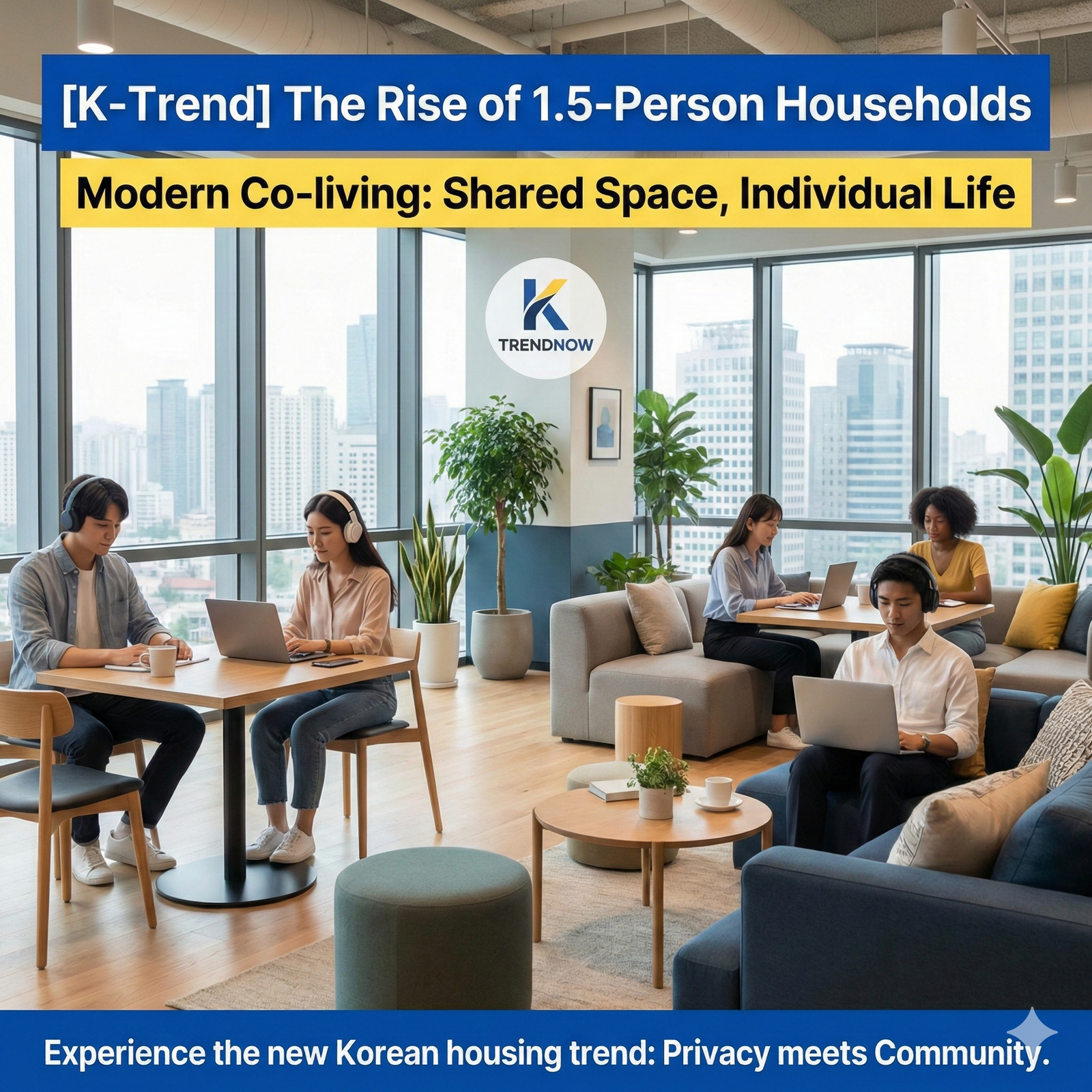
- Conceptual Definition: A new form of housing in Korea that combines the independent privacy of a single-person household with the social solidarity of a multi-person household, reducing housing costs while alleviating isolation.
- Background of Spread: To resolve rapid increases in housing costs in major cities like Seoul and the psychological isolation of single individuals, housing models sharing communal living rooms and kitchens are rapidly expanding.
- Social Value: Beyond mere space sharing, it is becoming an alternative to improve quality of life by integrating data-driven wellness management and smart home technologies.
Detailed Guide: Comparative Analysis of Household Types
| Category | 1-Person (Single) | 1.5-Person (Co-living) | Multi-person (Family) |
| Housing Philosophy | Autonomy vs. Isolation | Privacy + Loose Solidarity | Community-centered Care |
| Space Composition | All-in-one Studio | Private Bedroom + Large Lounge | Maximized shared area |
| Economic Efficiency | High Burden (100% Self) | Reduced via Subscription Model | Economies of Scale |
| Social Relations | High Risk of Disconnection | Immediate Networking Possible | Strong Emotional Bond |
| Technical Support | Individual Smart Home Setup | Integrated IoT Systems | Integrated Home Network |
| Psychological Stability | Loneliness in Freedom | Relieved by Others’ Presence | Emotional Support from Family |
Core Features of the 1.5-Person Household Lifestyle
- Absolute Privacy Protection: Private bedrooms and bathrooms are strictly separated, allowing for complete rest without interference from others.
- Premium Shared Amenities: Residents jointly use high-end facilities difficult to maintain individually, such as large gourmet kitchens, home cinemas, co-working spaces, and fitness centers.
- Wellness & Preventive Care: Recent 1.5-person residential complexes introduce wellness systems that help prevent diseases and manage health based on residents’ activity data.
- Subscription-based Housing Services: It takes the form of ‘Housing as a Service (HaaS),’ maximizing time efficiency by outsourcing domestic labor like cleaning, laundry, and breakfast services.
Action Plan: 5-Step Plan for Residing in a 1.5-Person (Co-living) House in Korea
- Define Location and Budget: Research market prices for co-living houses near major business districts and universities in Seoul, such as Gangnam, Mapo, and Seongsu.
- Verify Operator Expertise: Choose professional companies that specialized in community management and security systems, rather than simple real estate rentals.
- Review Shared Facility Rules: Thoroughly check detailed operating regulations, including kitchen usage hours, visitor policies, and appliance management.
- Utilize Short-term Stay Programs: Before signing a long-term contract, experience a short stay of one week to one month to see if it suits your personality.
- Link with Digital Nomad Visa: For foreigners, use the “K-Digital Nomad Visa” to register a professional co-living house in Korea as a long-term residence.
FAQ (Frequently Asked Questions)
- Q1: Is 1.5-person housing more expensive than regular rent?
- A1: While the rent itself might be slightly higher than a studio, actual living expenses are often reduced because costs for furniture, appliances, internet, utilities, and various membership services are included.
- Q2: Do residents have to become close with each other?
- A2: No. Since it aims for “loose solidarity,” residents can choose not to participate in community activities without any disadvantage to their living experience.
- Q3: Can the 50-60 age group reside in a 1.5-person household?
- A3: Yes. More seniors are choosing senior-specialized 1.5-person housing models to prevent social isolation and receive professional health management after retirement.
Sources
- Statistics Korea (KOSTAT) Single-person Household Trend Report
- Ministry of Health and Welfare (MOHW) Wellness Housing Welfare Guidelines
- Korea Law Information Center Enforcement Decree of the Housing Act