
Executive Summary
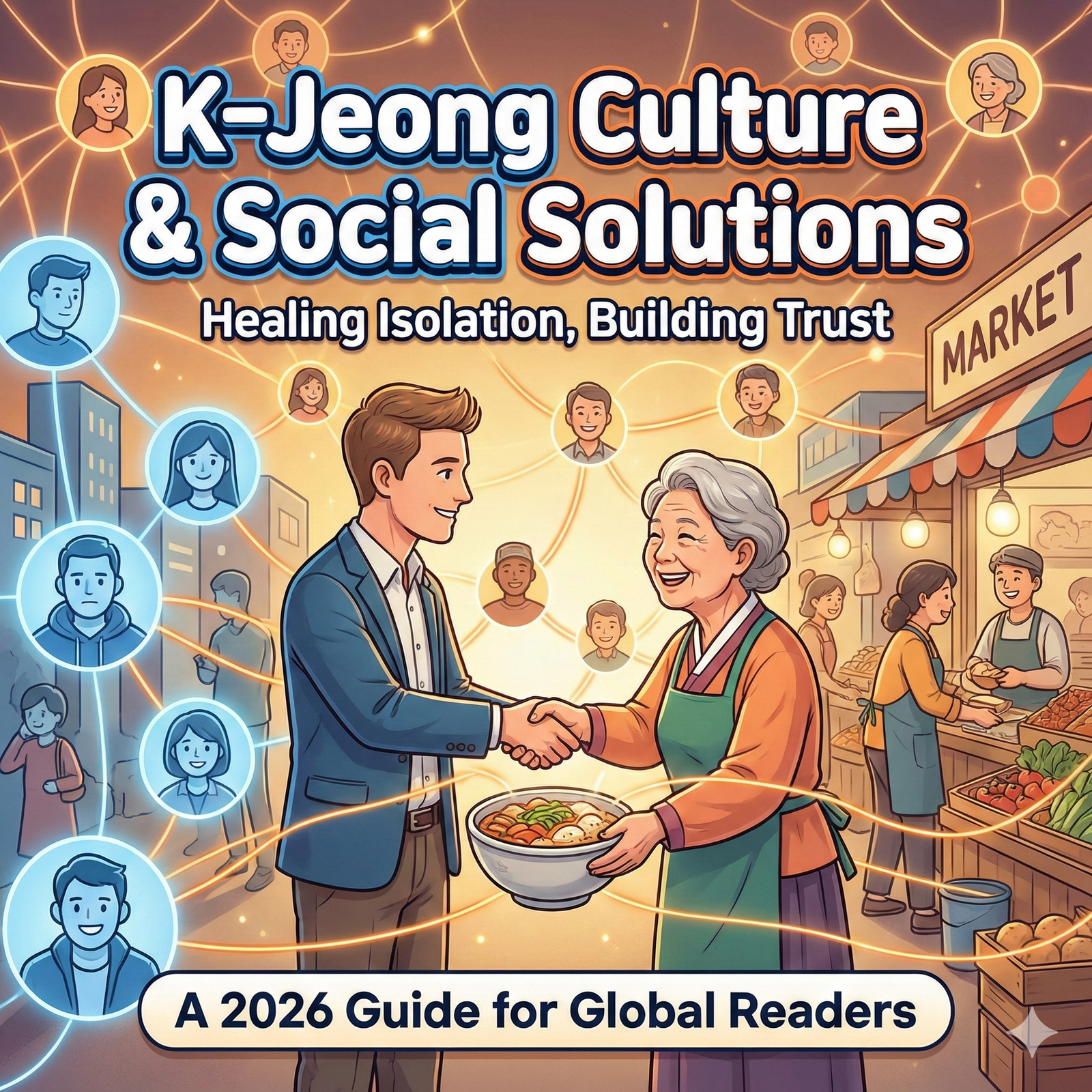
- Korean ‘Jeong’ (情) refers to a unique communal bond characterized by deep emotional attachment and mutual devotion that transcends simple love or friendship, serving as an invisible infrastructure supporting Korean society.
- As of 2026, amid rising individualism and social isolation, the government is institutionalizing these emotional ties through ‘Social Isolation and Loneliness Prevention Policies’ that reinterpret traditional Jeong for the modern era.
- For global residents, Jeong culture represents both a barrier and an opportunity; understanding and appropriately navigating it is essential for effective business networking and successful integration into local communities.
Detailed Guide: Types of Korean Jeong Culture and Modern Administrative Applications
Korean Jeong culture is evolving, integrating with technology and welfare policies in response to changing times. The following table summarizes the primary categories of Jeong and their real-world applications in social systems as of 2026.
1. Psychological Classification and Social Expression of Jeong
| Type | Definition & Characteristics | Modern Examples & Phenomena |
| In-jeong (Compassion) | Innate pity and mercy felt when seeing the hardships of others. | Spontaneous relief activities during disasters and anonymous donation culture. |
| I-ut-jeong (Neighborly Bond) | Emotional ties and mutual aid between close neighbors (e.g., sharing food). | Sharing activities through local community platforms like Karrot Market. |
| Mi-un-jeong (Lingering Attachment) | A complex bond formed through repeated conflict or dislike that remains hard to break. | Long-term organizational loyalty and intricate family dynamics. |
| Digital Jeong | Non-face-to-face emotional support and solidarity formed through online platforms. | Shared interests in open group chats and online mourning cultures. |
2. Jeong Reflected in 2026 Government Policies (Welfare & Administration)
The government is building social safety nets by incorporating the communal nature of Jeong into administrative services.
| Policy Name | Key Features | Expected Outcome |
| Neighborhood Care Captains | A system where residents regularly visit isolated households to check on their well-being. | Elimination of welfare blind spots and strengthening of emotional bonds. |
| Youth Mental Health Support | Community activities and emotional support programs specifically for isolated youth. | Prevention of social disconnection and enhancement of psychological resilience. |
| AI Well-being Check Service | AI makes phone calls to single-person households to provide emotional interaction and detect anomalies. | Prevention of lonely deaths and establishment of 24-hour constant care. |
| K-Immigrant Settlement Mentoring | Native residents provide life guides to immigrants based on the concept of Jeong. | Prevention of cultural alienation for immigrants and promotion of social integration. |
Action Tips: A Step-by-Step Plan for Navigating and Utilizing ‘Jeong’ Culture (For Global Readers)
In Korea, Jeong serves as powerful trust capital in both business and daily life. Follow these guidelines to put it into practice.
- Understand and Practice ‘Deom’ (Extra Bonus): Small extra services (Deom) provided at markets or restaurants are not just freebies but the beginning of an emotional connection. Express gratitude actively rather than taking it for granted to open doors in relationships.
- Participate in Family Events (Condolences/Congratulations): In Korean society, Jeong deepens more when sharing sorrow than joy. Expressing condolences at a colleague’s or neighbor’s funeral is the fastest way to be included in an ‘In-group.’
- Decode the Subtext of Meal Invitations: The phrase “Let’s have a meal sometime” can be a mere greeting, but it also signals a desire to improve the relationship. If you wish to proceed, secure an opportunity by proposing a specific time: “How about lunch next Thursday?”
- Join Digital Community Platforms: Use location-based apps (e.g., Karrot, Somoim) to participate in offline activities. In 2026, new forms of community mediated by technology are highly active in Korea—make full use of them.
FAQ
- Q1: What is the boundary between Jeong and ‘O-ji-rap’ (excessive interference)?
- A1: While Jeong stems from a pure desire for another’s well-being, it turns into O-ji-rap when it fails to respect privacy. Modern Korean MZ generations prefer Jeong that maintains a ‘comfortable distance,’ so it is important to show interest without overstepping personal boundaries.
- Q2: Does Jeong culture ever act negatively (favoritism) in business?
- A2: In the past, Jeong sometimes led to cronyism (based on school or hometown ties), but as of 2026, transparent administrative systems and strengthened corporate ethics have reduced such side effects. Business Jeong is now interpreted as the result of long-term trust and partnership rather than simple favoritism.
- Q3: Where is the best place for a foreigner to experience Jeong?
- A3: Rather than sophisticated spaces in major cities, I recommend traditional markets in rural areas, alleyway restaurants, or community centers run by local governments. In these places, you can directly experience the warmth between people rather than standardized service.
Sources
- Ministry of Health and Welfare (MOHW) 2026 Implementation Plan for Preventing Lonely Deaths
- Academy of Korean Studies (AKS) Encyclopedia of Korean Culture: ‘Jeong’ (情)
- Statistics Korea (KOSTAT) 2025 Social Indicators: Survey on Social Networks of Koreans