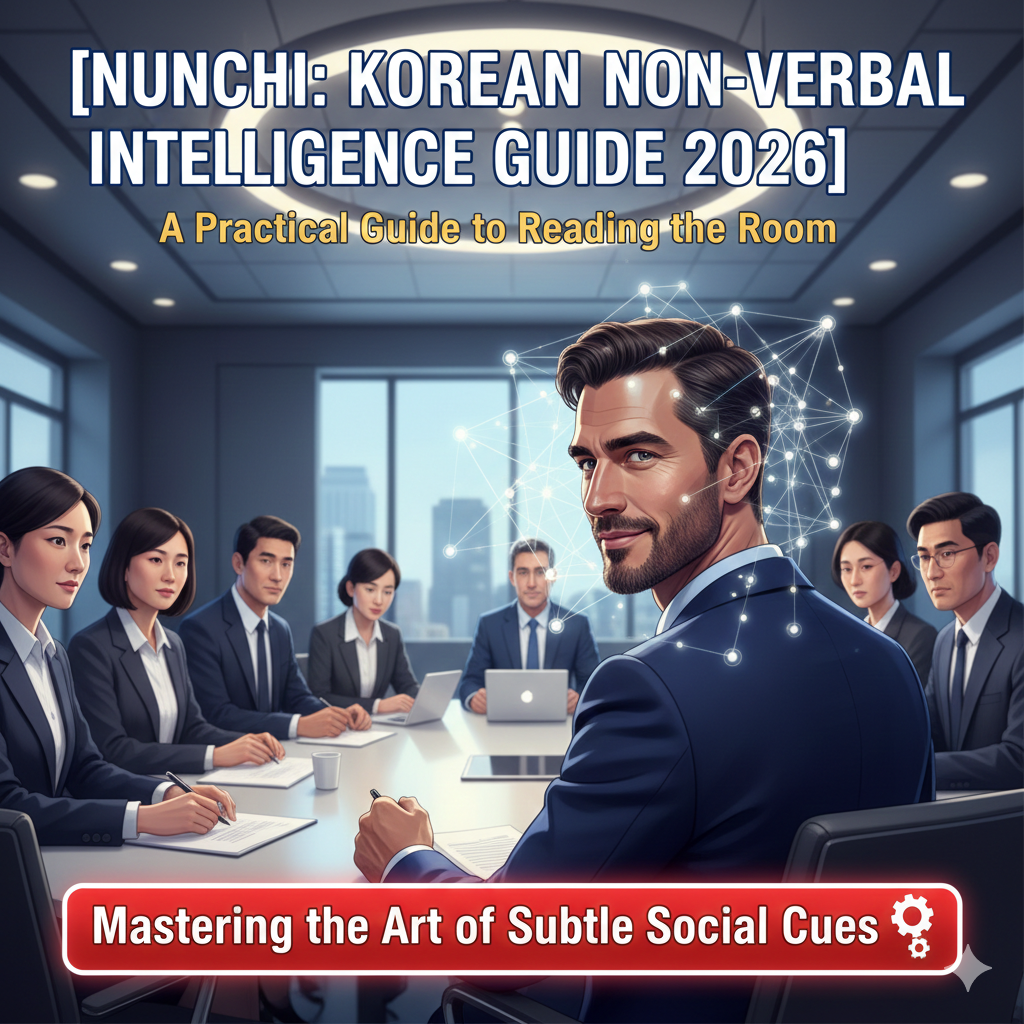
‘Nunchi’ is a unique Korean form of high-context emotional intelligence, referring to the ability to quickly and accurately grasp a situation and respond by reading non-verbal cues such as facial expressions, tone of voice, and overall atmosphere.
As of 2026, Korean society is in a transition period; while moving away from ‘Toxic Nunchi’ (over-consciousness of others’ eyes), it is embracing ‘Healthy Nunchi’ for efficient collaboration, driven by horizontal organizational cultures and MZ generation values.
For global readers, Nunchi is a critical social skill for building partnerships and preventing conflicts with Koreans; mastering it can significantly shorten the time required to establish mutual trust.
Detailed Guide: Situational Nunchi Utilization and Social Mechanisms
In Korean society, Nunchi is evaluated as a comprehensive EQ for understanding social hierarchies, moods, and unspoken rules beyond mere consideration.
1. Three Major Nunchi Scenarios and Response Systems
Category
Primary Observation Target
Practical Action Plan
Remarks
Business (Meetings/Negotiations)
Silence of decision-makers, shifts in tone
Sense the mood (Kibun) before asking; gauge work atmosphere before superiors leave
Higher-ranking individuals often use indirect communication
Social Dining (Gatherings)
Empty glasses, eating pace, utensil placement
Pace your meal with elders; refill water/side dishes proactively (with Nunchi)
Traditional hierarchy-centric norms are shifting toward efficiency
Digital Communication (IMs)
Reply speed, use of emojis, orthography
Decide on response speed after checking the ‘Read’ status; read emotions behind text
Emerging field of ‘Digital Nunchi’ in the age of AI
Increased emphasis on ‘Clear Communication’ over guesswork
Relationships
High-level empathy for others’ needs
Collectivist pressure and hierarchy-focused thinking
Preference for Nunchi that maintains a ‘Comfortable Distance’
Action Tips: 5-Step Action Plan for International Readers
Observe First, Act Later: When joining a new group or meeting, stay quiet for the first 5 minutes to identify the decision-maker and gauge the “room vibe” before contributing.
Decode Indirect Speech: When a Korean says “Well…” or “I’ll think about it,” it often signifies a polite refusal. Instead of taking it literally, use your Nunchi to offer an alternative or a compromise.
Calibrate Response Timing: Responding too aggressively fast or too slowly can be seen as rude. Aligning your response speed with those around you creates an impression of being ‘quick-witted’ (Nunchi-ga bbareda).
Leverage Non-Verbal Cues: If your counterpart avoids eye contact or clears their throat frequently, it’s a signal to change the topic. Pivoting naturally at this moment shows high Nunchi.
Balance Humility and Harmony: Rather than boasting about individual achievements, mention the team’s effort and observe reactions. This is the fastest way to gain long-term trust in the Korean business ecosystem.
FAQ
Q1: What does it mean to ‘have no Nunchi’ (Nunchi-ga eopda), and how can I fix it?
A1: It describes someone who lacks social intelligence or fails to read the room, disrupting the social flow. To improve, focus on observing the context rather than just the conversation and try to think twice about the hidden intent behind people’s words.
Q2: Is Nunchi culture disappearing in the global era?
A2: As of 2026, Nunchi is ‘evolving’ rather than disappearing. While top-down hierarchical Nunchi is decreasing, ‘Hyper-personalized Nunchi’—respecting others’ tastes and privacy—is becoming increasingly vital.
Q3: Do I, as a foreigner, strictly need to follow Nunchi?
A3: International residents are not expected to have the same level of Nunchi as locals. In fact, ‘direct communication’ can sometimes be a strength. However, showing basic Nunchi sends a powerful message that you “respect Korean culture,” which dramatically improves relationships.
Sources
Ministry of Culture, Sports and Tourism: ‘Nunchi: The Korean Secret to Happiness and Success’ promotional materials
Seoul National University, Social Science Research Institute: Analysis Report on Korean Communication Styles and High-Context Culture
Major HR Consulting Groups: 2026 Workplace Culture Trend Report