
Executive Summary
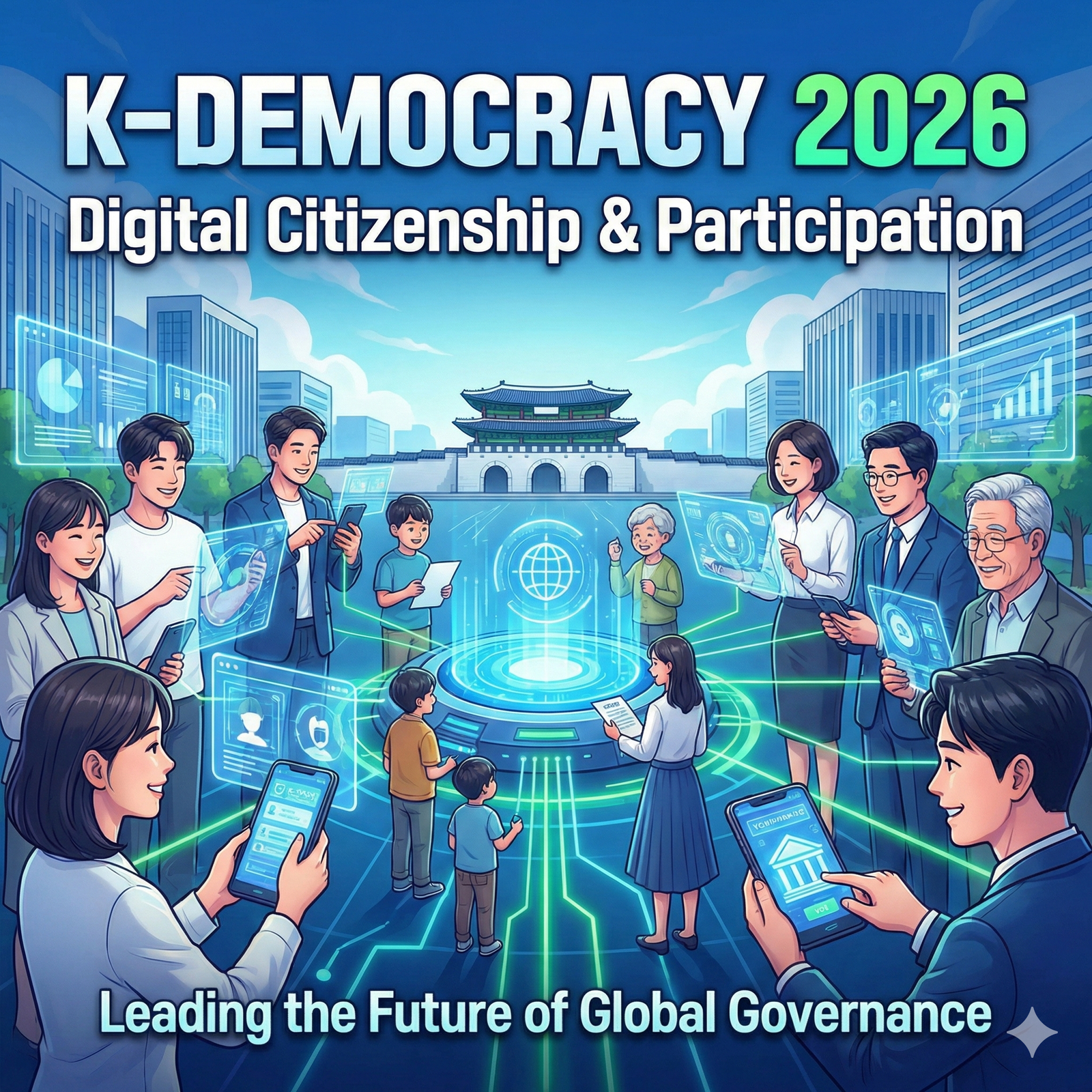
South Korea has built a world-class level of democratic citizenship through its dynamic modern history, and as of 2026, it is establishing ‘Digital Citizenship’—utilizing AI and digital technology—as a new core value of democracy. In January 2026, the Ministry of Education announced the “Democratic Citizenship Education Implementation Plan,” focusing on expanding school education centered on constitutional values and strengthening media literacy to counter fake news. Furthermore, through the “Digital Bill of Rights,” Korea ensures universal digital access for all citizens and realizes an advanced participatory democracy where citizens directly engage in policy formulation and budgeting via platforms like On-Gwanghwamun.
Detailed Guide: Systems and Achievements of Korean Democratic Citizenship in 2026
Korean democratic citizenship is structured by a combination of institutional foundations and voluntary civic engagement.
1. Key Governance Systems of Democratic Citizenship
| Category | Primary Content | Achievements & Indices |
| Digital Citizenship | Proclamation of ‘Digital Bill of Rights’ (28 Articles) | World’s first digital order norms; guaranteed universal access |
| Education System | 2026 Democratic Citizenship Education Plan | Expansion of constitutional education to 2,000 classes; media literacy |
| Participation Platforms | On-Gwanghwamun, Sinmungo, Participatory Budgeting | Ranked 4th globally in the UN E-Participation Index |
| Legal Basis | Pushing for ‘School Democratic Citizenship Education Act’ | Legalization of teaching/learning principles; 150 pilot schools |
| Macro Indices | OECD Digital Government Index | Ranked 1st (Data-driven admin and user-centricity) |
2. Five Core Tasks of 2026 Democratic Citizenship Education
- Internalization of Constitutional Values: Education links constitutional spirits and democratic principles to daily life throughout the K-12 curriculum. Professional instructors are expanded to high schools in collaboration with the Ministry of Justice.
- Strengthening Digital Media Literacy: Developing the capacity to critically respond to threats in the digital environment, such as AI-generated fake news, confirmation bias, and deepfakes.
- Promoting Participation in Schools and Communities: Running ‘Pilot Schools for Democratic Citizenship’ to activate student self-governance and support direct student involvement in solving various local social issues.
- Qualitative Sophistication of Participatory Budgeting: Moving beyond simple receipt of proposals, the system expands deliberation and adjustment processes where citizen committees review feasibility with administrative departments, with all processes disclosed transparently.
- Leading Global Digital Norms: Based on Korea’s digital innovation experience, the country spreads the values of the ‘Digital Bill of Rights’ to resolve digital disparities and establish a universal order in the international community.
Action Tips: Step-by-Step Action Plan for Direct Policy Participation
Methods that citizens living in Korea or those interested in Korean policy can implement immediately.
- Join Digital Participation Platforms: Access ‘On-Gwanghwamun’ or local government civic participation websites and sign up after identity verification.
- Draft Policy Proposals: Post ideas for administrative improvements or daily inconveniences with text and images. Proposed ideas can be reflected in actual policies after public consensus voting.
- Apply for Participatory Budget Committees: Apply for local budget committees recruited early each year to review and decide where your region’s budget will be spent.
- Complete Media Literacy Training: Participate in training on identifying fake news and digital rights provided by the Ministry of Education or local lifelong learning centers.
- Utilize Public Data: Analyze data from the ‘Public Data Portal’ to monitor administrative transparency or participate in advanced civic monitoring by proposing new services.
FAQ
- Q1: Can foreigners participate in Korea’s democratic activities or policy proposals?
- A1: Yes, they can. Foreigners who have held permanent residency for over three years have the right to vote in local elections. Most policy proposal platforms and participatory budgeting systems are open to foreign residents in the respective region.
- Q2: How does the ‘Digital Bill of Rights’ practically help our lives?
- A2: This bill establishes principles the state must protect, such as guaranteed access to unmanned kiosks, strengthened control over personal info, and protection of digital assets, providing a basis for practical legal and policy protection in the digital age.
- Q3: Is there a concern that democratic citizenship education might turn into biased political education?
- A3: To prevent this, the government is legalizing ‘Teaching and Learning Principles.’ The model aims for neutral and objective education that allows students to judge constitutional values themselves through discussion and critical thinking, rather than forcing specific political views.
Sources
- Ministry of Education (MOE) Press Release: “2026 Democratic Citizenship Education Plan”
- Ministry of Science and ICT (MSIT) “Digital Bill of Rights” Full Text
- UN DESA 2024 E-Government Survey (E-Participation Index)
- Ministry of the Interior and Safety (MOIS) Digital Government Cooperation Report
- Local Government Notices on Participatory Budgeting (Chungbuk/Gunpo)