
Key Summary
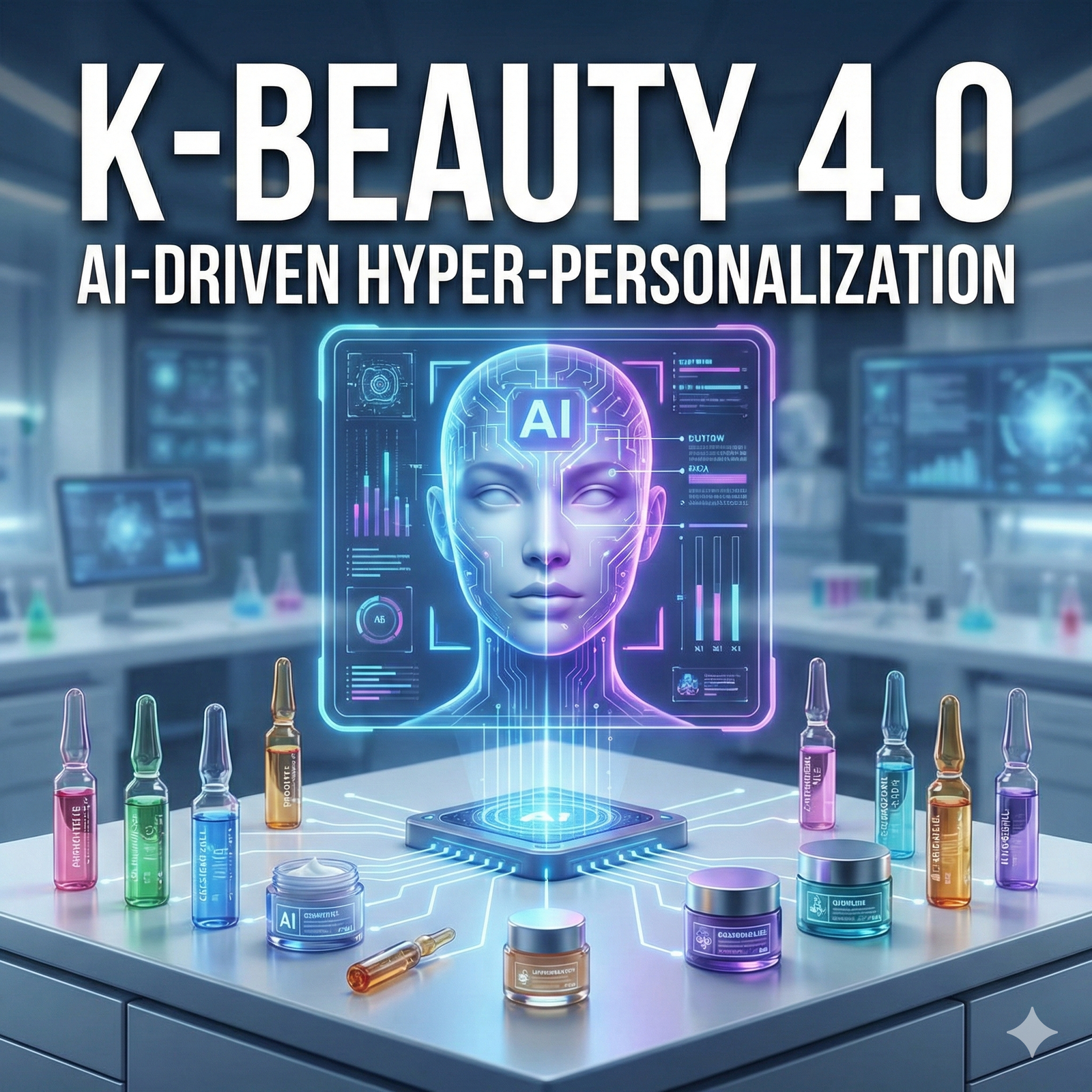
- K-Beauty 4.0 marks the era of “Hyper-Personalization,” moving away from mass-produced cosmetics to utilize AI, big data, and genetic analysis to provide skincare solutions tailored to a single individual.
- Building on South Korea’s world-first “Customized Cosmetics” regulation, the global beauty standard is shifting toward “Skin-Tech,” featuring on-site formulation and AI-powered diagnostic devices.
- Global consumers can now move beyond following trends to enjoy the safest, most optimized beauty experience through high-efficiency, low-irritation scientific care based on their unique skin data.
Detailed Guide: Evolution of K-Beauty and Analysis of Hyper-Personalization Technology
The focus of K-Beauty has shifted significantly over the years. The current 4.0 stage is the result of South Korea’s IT prowess being perfectly integrated into the beauty industry.
1. Comparative Stages of K-Beauty Evolution
| Stage | Key Keywords | Features & Representative Products |
| K-Beauty 1.0 | Universal Reach | Popularization of BB Creams, mass-produced cost-effective products |
| K-Beauty 2.0 | Naturalism | Herbal ingredients, sheet masks, global expansion of road-shop brands |
| K-Beauty 3.0 | Routine & Efficacy | 10-step skincare, “Glass Skin” craze, focus on functional ingredients |
| K-Beauty 4.0 | Hyper-Personalization (AI) | AI skin diagnosis, bespoke formulation, DNA-based solutions, tech-device integration |
2. Key Technological Pillars of K-Beauty 4.0
- AI Precision Diagnosis: Using smartphone cameras or specialized scanners to measure pores, wrinkles, spots, and hydration levels. AI trained on tens of thousands of clinical data points predicts skin age and potential future issues.
- Bespoke Formulation: Based on diagnosis, professional formulators mix ingredients on-site, or smart factory systems manufacture essences and foundations instantly.
- Microbiome & Genetic Analysis: Analyzing the skin’s microbial ecosystem (microbiome) or innate genetic traits to prescribe anti-aging solutions that strengthen the skin’s natural barrier.
- Smart Beauty Devices: From galvanic devices to LED masks, internal sensors detect skin conditions in real-time to adjust output intensity for maximum absorption.
Action Tips: Step-by-Step Plan to Experience K-Beauty 4.0
- Use AI Diagnostic Apps: Download apps like Amorepacific’s “Custom.me” or those featuring Lululab technology to generate your personal skin report.
- Book a Flagship Store Visit: K-Beauty flagship stores in Seoul (e.g., Amore Seongsu, Laneige Bespoke Neo) offer AI diagnosis and custom manufacturing. Be sure to book via their websites in advance.
- Verify Customized Ingredients: When purchasing, opt for solutions tailored to your specific needs (e.g., adjusted concentrations of Ceramide or Retinol) identified in your diagnosis, rather than “all-in-one” generic products.
- Integrate with Devices: Upgrade your routine by using data-linked beauty devices to ensure that the active ingredients of your customized cosmetics are delivered deep into the skin.
FAQ
- Q1: Is customized skincare significantly more expensive?
- A1: Prices may be slightly higher due to the diagnostic process and individual formulation. However, it is a more economical investment in the long run as it reduces the “trial and error” cost of buying products that don’t suit your skin.
- Q2: Can I access Korean customized beauty services abroad?
- A2: Many Korean beauty tech companies are expanding globally. More brands offer online AI diagnosis and international shipping, and offline presence is growing through partnerships at global tech fairs like CES.
- Q3: Is AI skin diagnosis actually reliable?
- A3: Korean AI beauty tech is trained on millions of high-definition skin images. Combined with moisture sensors and optical tech, it offers accuracy comparable to a visual examination by a dermatologist.
Source
- Ministry of Food and Drug Safety (MFDS) “Guide to Customized Cosmetics System”
- Amorepacific R&I Center “Future of K-Beauty Tech Report”
- Korea Health Industry Development Institute (KHIDI) “Global Cosmetic Trends & Tech Analysis”