
Executive Summary
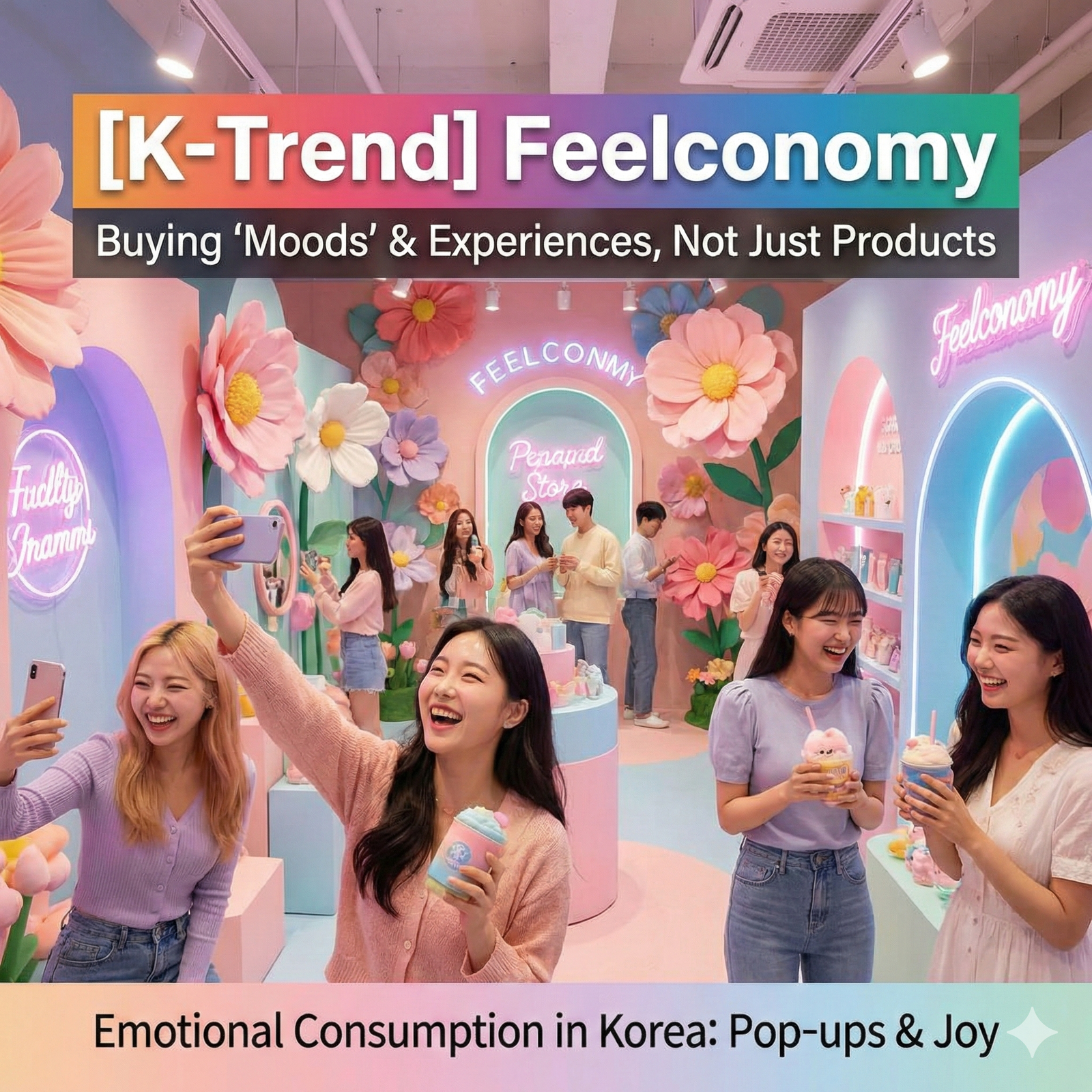
- Definition: A portmanteau of ‘Feel’ and ‘Economy,’ it refers to a consumption pattern that prioritizes emotional satisfaction and mood enhancement over the performance or price of a product.
- Social Background: It reflects the values of the MZ generation, who do not hesitate to spend on things that bring small but immediate happiness as a way to relieve stress in a highly competitive society.
- Industrial Impact: Companies are pivoting from function-oriented marketing to experiential marketing, such as pop-up stores and character collaborations, that offer unique experiences and sensibilities.
Detailed Guide: Comparison Between Traditional Economy and Feelconomy
Feelconomy moves beyond the framework of traditional economics, which emphasizes rational choices, toward maximizing psychological utility. The table below analyzes the core differences.
| Category | Traditional Consumption (Rational) | Feelconomy (Emotional) | Remarks & Characteristics |
| Core Motive | Value for money, Practicality | Psychological satisfaction, Emotional reward | Mood after purchase is the decisive factor |
| Decision Criteria | Quality, Specs, Durability, Lowest price | Storytelling, Design, Limited editions, Experience | Buying the ‘vibe’ rather than just the product |
| Primary Objects | Essentials, Durable goods | Goods, Experiential exhibitions, Character products | Includes ‘Small Luxuries’ in daily life |
| Marketing Style | Functional descriptions, Price discounts | Pop-up stores, Instagrammable aesthetics | Focus on visual/emotional stimulation in space |
| Consumption Result | Need fulfillment, Economic efficiency | Stress relief, Self-identity expression | Psychological comfort like ‘a gift for myself’ |
Three Core Drivers of the Feelconomy Expansion
- Compensation Psychology in a Hyper-competitive Society
- Facing uncertainties regarding the future like employment and housing, Korea’s younger generation pursues immediate small joys rather than large achievements.
- Buying ‘pretty trash’ (visually appealing but impractical items) or expensive desserts on the way home acts as a minimum ’emotional reward’ for a hard day.
- Visual Communication of Digital Natives
- The culture of sharing daily life through SNS (Instagram, TikTok) has increased the value of ‘perceived emotions’.
- Beyond just using an object, the social recognition and self-satisfaction gained by photographing the atmosphere where the object is placed reinforce Feelconomy.
- Transition to the Experience Economy
- It is an era where ‘what experiences one has had’ serves as a symbol of wealth and a measure of individuality rather than material possession.
- Empathizing with a specific brand’s philosophy or visiting a space operated only for a limited time becomes the core purpose of consumption.
Action Tips: 5-Step Action Plan for Smart Feelconomy Practice
- Keep an Emotional Ledger: Record your mood when buying and your satisfaction one week later to see if true ’emotional compensation’ occurred.
- Use Pop-up Reservation Apps: Follow official SNS of major pop-up hubs like Seongsu-dong or use apps like ‘Catch Table’ to visit spaces that offer high experiential value for the cost.
- Assetize Limited Edition Goods: Check if items bought for emotional satisfaction have ‘Resell’ value to practice strategic Feelconomy where consumption becomes an investment.
- Use Subscription Taste Services: Systematically receive new emotional stimuli every month through regular subscription services for flowers, tea, or traditional liquor that suit your taste.
- Utilize AI Emotion Analysis Tools: Use wellness apps that analyze your stress index or mood to prevent unnecessary impulse buying and find the right time for healing consumption.
FAQ (Frequently Asked Questions)
- Q1: Does Feelconomy encourage overspending?
- A1: High prices do not define Feelconomy. If a $1 sticker provides enough mood enhancement, that is the essence of Feelconomy. However, one should be wary of mindless spending driven by fleeting emotions.
- Q2: How are companies responding to the Feelconomy trend?
- A2: They focus on ‘Space Marketing.’ Department stores fill the first floor with rest and exhibition spaces instead of cosmetics counters, and brands operate flagship stores where their worldview can be experienced to secure positive consumer emotions.
- Q3: Is Feelconomy a phenomenon unique to Korea?
- A3: While it aligns with the global ‘Experience Economy’ trend, it manifests in a more intensive and unique form in Korea due to the rapid spread of trends and a culture that values psychological satisfaction.
Sources
- 2026 Trend Korea Report and Economic Analysis
- Ministry of Culture, Sports and Tourism K-Lifestyle Consumption Pattern Survey
- Korea Economic Research Institute Report on Consumption Sentiment Changes of MZ Generation