
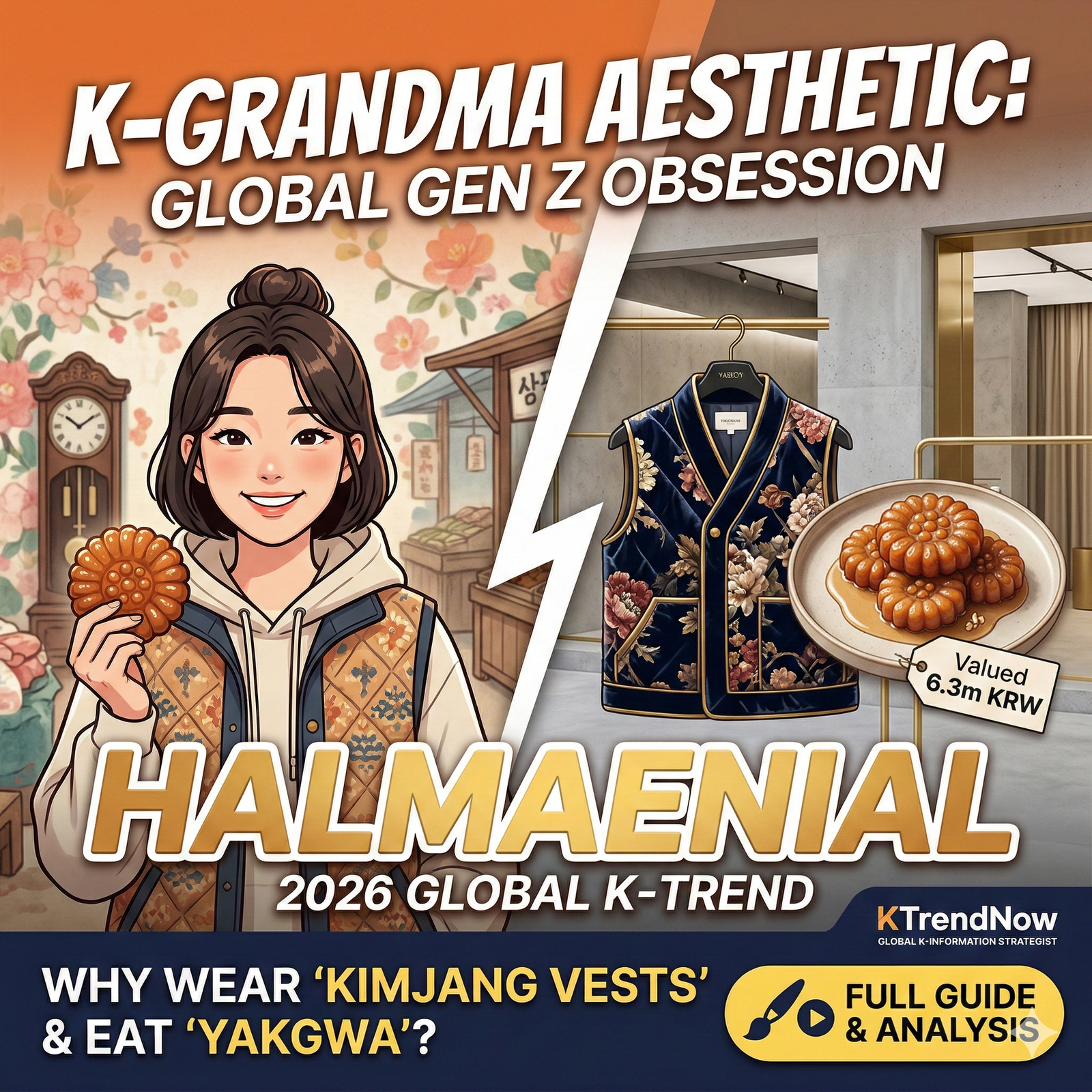
Global Context: From Local Practicality to Global Luxury
In 2026, the global fashion and food landscape has been unexpectedly conquered by a style once reserved for elderly women in rural South Korea. Known as Halmaenial—a portmanteau of Halmeoni (Grandmother) and Millennial—this trend reflects a broader cultural shift towards authenticity, comfort, and heritage. What started as an ironic appreciation for vintage floral patterns has evolved into a multi-billion dollar market influencing high-fashion houses and global snack giants.
1. The Fashion Phenomenon: The Rise of the ‘Kimjang Vest’
The hero of the 2026 winter season is undoubtedly the Nubi (quilted) vest, or the Kimjang vest. Originally designed for maximum mobility and warmth during the laborious kimchi-making season, these floral-patterned, padded vests were once dismissed as purely functional workwear.
However, the tide turned when K-pop icons such as Jennie of BLACKPINK and Karina of aespa were spotted wearing them in casual social media posts. By early 2026, global luxury brands like Valentino and Moncler released their own reinterpretations. For instance, Valentino’s luxury version, featuring shearling details and high-end floral motifs, is priced at approximately 6.3 million KRW (about $4,500), while the original versions still sell for under $10 at Seoul’s Namdaemun Market.
2. The Culinary Craze: Yakgwa Takes Over the World
The Halmaenial trend is equally potent in the food sector. Yakgwa, a traditional Korean honey-soaked pastry, has moved beyond the status of a festive ritual food to become a global viral snack. In 2026, exports of Yakgwa to major markets like the United States and China hit record highs, with companies like SPC Samlip reporting a 70% increase in international sales.
Global consumers are particularly drawn to the chewy, syrupy texture often described on TikTok as ‘kkudeok’. This popularity has led to the entry of traditional Korean desserts into mainstream Western retailers like Costco, signaling that K-food has moved far beyond ramyeon and kimchi into the sophisticated dessert market.
3. The Philosophy: Slow Living and JOMO in 2026
The underlying reason for this obsession is a generational shift towards Slow Living and JOMO (Joy of Missing Out). In an era of hyper-digitalization and burnout, Gen Z is seeking solace in the warm, tactile, and slow-paced values associated with ‘grandmotherly’ hobbies.
The Halmaenial aesthetic offers a sense of safety and nostalgia. Whether it is wearing a cozy quilted vest or enjoying a piece of handmade rice cake, these actions provide a form of digital detox and a connection to a tangible past.
How to Experience ‘Halmaenial’ in Korea
- Visit Traditional Markets: Head to Namdaemun Market or Gwangjang Market in Seoul to find authentic, affordable Kimjang vests and freshly made Yakgwa.
- Explore Seongsu-dong Pop-ups: Many Korean brands in the trendy Seongsu area host 2026 pop-up stores that reinterpret traditional crafts and hair care into modern luxury.
- Traditional Tea House Crawl: Visit Insadong to experience a tea ceremony paired with artisanal honey cookies to truly understand the ‘Slow Living’ philosophy.
FAQ & Global Engagement
Q1. Is the Kimjang vest actually wearable in daily life? Yes! Its sleeveless design makes it perfect for layering over hoodies or under coats. Global fashion influencers now treat it as a versatile, avant-garde piece.
Q2. Where is the best place to buy authentic Yakgwa online? In 2026, premium brands like Bomnal& and mass-market options from SPC Samlip are widely available on global platforms like Amazon and H-Mart.
Q3. Is this trend disrespectful to elderly culture? Quite the opposite. The Halmaenial trend has brought a renewed respect for traditional artisans and has bridge the generational gap through shared style and taste.