
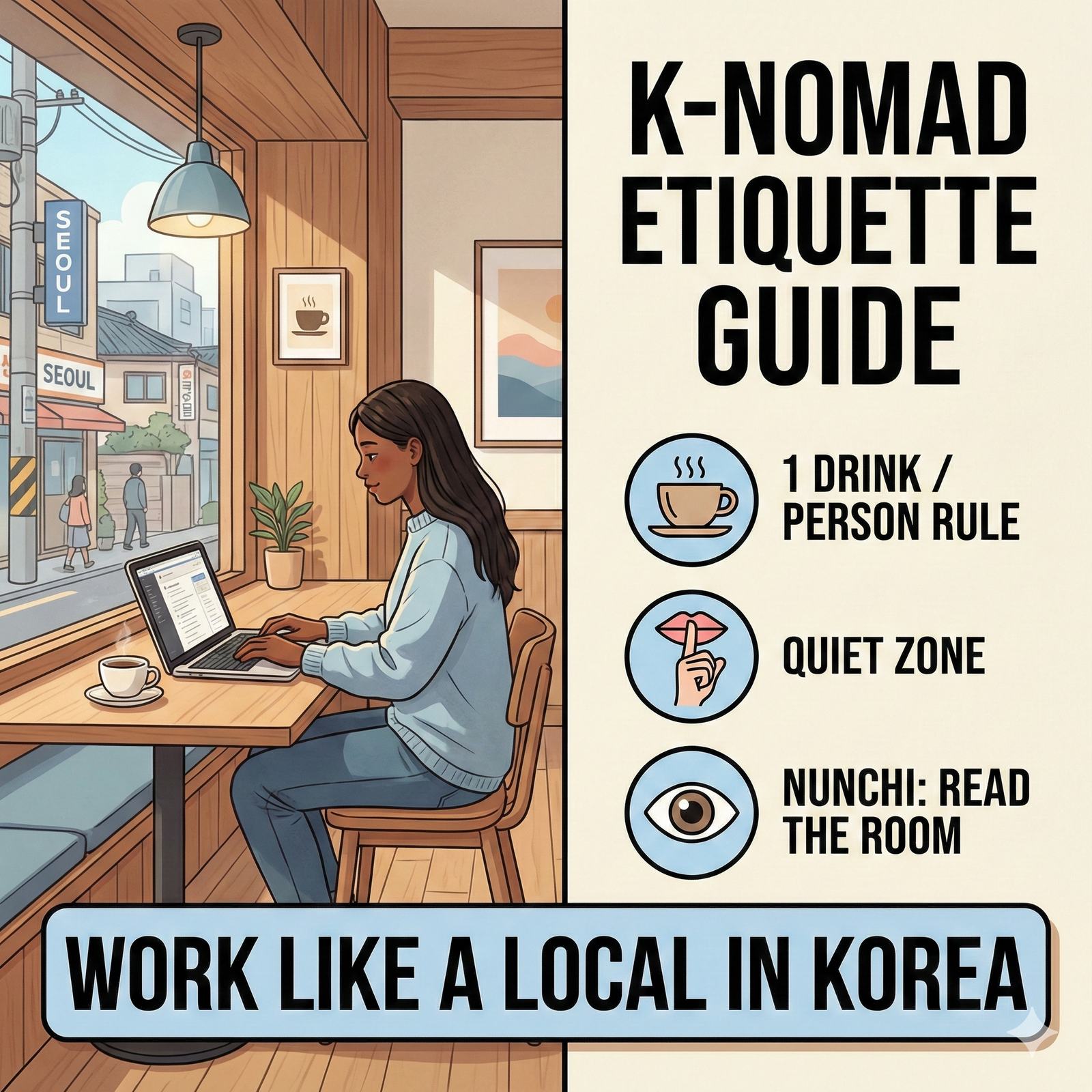
Core Summary & ‘The Golden Nugget’
- The digital nomad culture in Korea has evolved alongside the unique “Ka-gong-jok” (cafe study/work) phenomenon, emphasizing quiet focus and deep respect for public spaces.
- In 2026, it’s increasingly common for Korean cafes to implement “No Work Zones” or time limits, making it essential to identify “work-friendly” spots before arriving.
- While Korea’s high-trust culture allows you to leave your laptop unattended safely, following the “one drink per person” rule and maintaining a low noise profile are the absolute essentials.
“The One Thing to Remember”
Success as a K-Nomad hinges on ‘Nunchi’—the art of reading the room to balance your productivity with the establishment’s atmosphere.
Detailed Guide & Comparison: K-Nomad vs Global Standards
While Korea offers world-class internet and aesthetic cafe infrastructures, the local “unspoken rules” differ significantly from the more casual nomad cultures found in the West or SE Asia.
[Digital Nomad Etiquette: Korea vs. Global Standard]
| Category | Global Standard | K-Nomad Standard (K-Etiquette) | Pro Tip |
| Ordering | One drink for an entire stay is often tolerated. | One drink per person is mandatory. Re-order if staying over 3 hrs. | Think of your order as a “space rental fee.” |
| Noise Level | Video calls or moderate chatting are common. | Extreme quietness is preferred. Take calls in booths or outside. | Most Korean cafes are designed for relaxation or quiet focus. |
| Power Outlets | Free to use anywhere. | Use only at designated seats. Avoid using multiple outlets. | Many cafes now block outlets to discourage long stays. |
| Security | Never leave belongings unattended. | Safe to leave a laptop while visiting the restroom. | A famous cultural phenomenon reflecting Korea’s low crime rate. |
| Clean-up | Staff often clean the tables. | Self-return is the default. Wipe your table before leaving. | Separate your ice and liquids at the return station. |
Action Plan: 4 Steps to Becoming a Respected K-Nomad
- Check the Vibe (Navigating ‘Nunchi’): Look for signs like “No Laptops” or “2-hour Limit” at the entrance. Use Naver Maps and search for “Good for working” (카공하기 좋은) to find welcoming environments.
- Control Your Virtual Presence: Conducting a Zoom meeting in a standard Korean cafe is often considered rude. If you have a meeting, book a phone booth in professional coworking spaces like ‘Jibmusil’ or ‘Local Stitch’.
- The 3-Hour Re-order Rule: If you plan to stay longer than three hours, it is a polite Korean custom to order a second drink or a small snack. This supports small business owners and marks you as a mindful nomad.
- Digital Silence: Ensure your headphones aren’t leaking sound. If you are a heavy typist, consider using a silicone keyboard skin to dampen the noise—your neighbors will thank you.
Internal Linking Suggestion
- [Top Workation Stays in Seoul & Jeju]: Now that you know the rules, find the best places to stay and work.
- [K-Workation Visa (F-1-D) 2026 Update]: Planning a long-term stay? Check the latest legal requirements for digital nomads.
FAQ (Frequently Asked Questions)
- Q1: Can I really leave my laptop on the table and go to the bathroom?
- A1: Yes, it is remarkably safe. Koreans have a strong unspoken rule against touching others’ property. However, for high-end gear, it’s always wise to take your most valuable items with you or ask a neighbor to keep an eye out.
- Q2: Are “No Kids Zones” or “No Work Zones” discriminatory?
- A2: In Korea, these are viewed as business decisions to protect the rights of other patrons who seek a specific environment. Embracing this cultural difference and choosing “work-friendly” spots will make your stay much smoother.
- Q3: Is tipping expected in cafes?
- A3: Not at all. Korea has zero tipping culture. The best “tip” you can give is a polite “Kamsahamnida” (Thank you) and returning your tray to the designated station.