
Key Summary
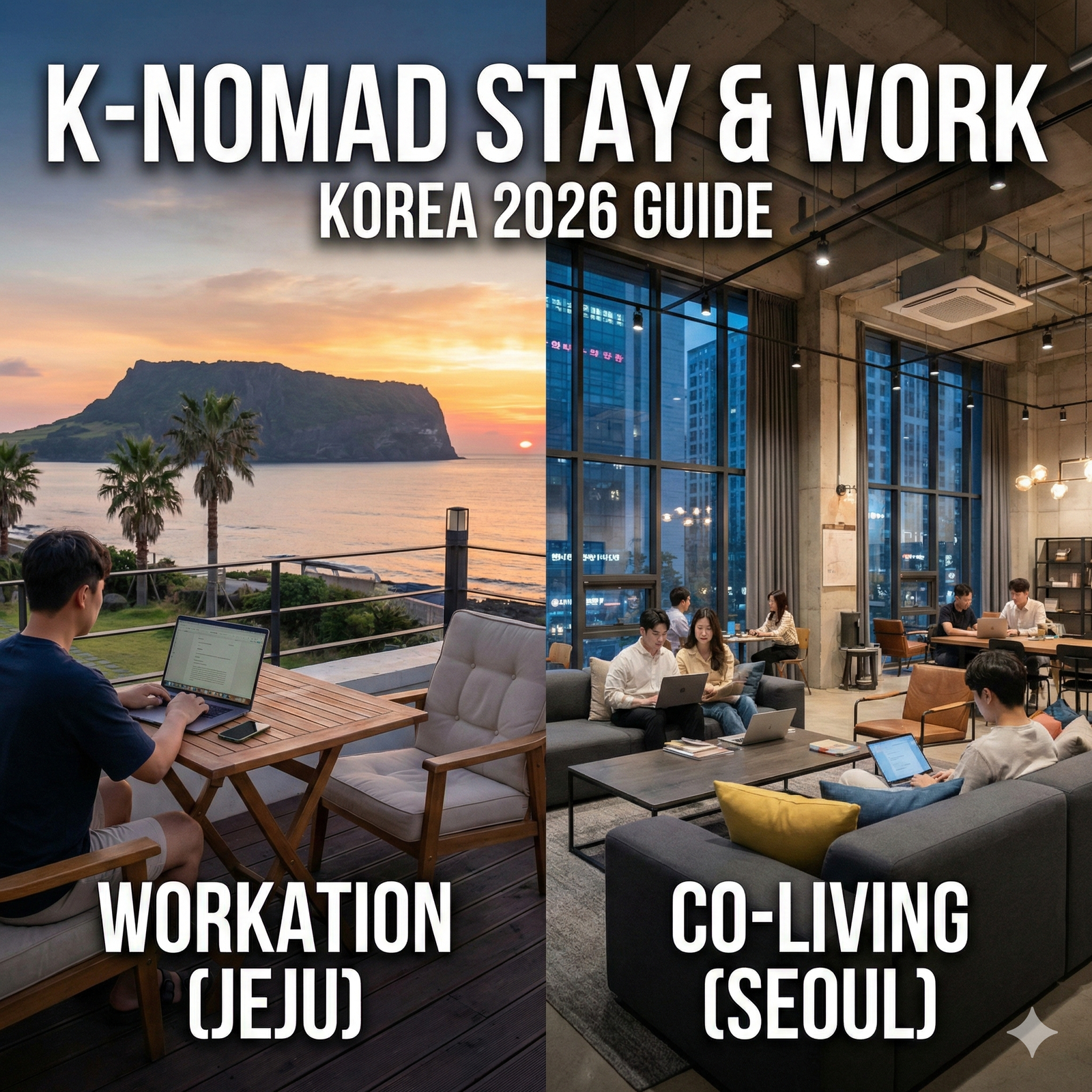
- By 2026, South Korea has evolved into a digital nomad haven, with specialized ‘Co-living’ and ‘Workation’ infrastructures expanding nationwide to seamlessly integrate professional work with local life.
- Global nomads favor specialized hubs in Seoul’s Seongsu and Hannam districts and Jeju’s coastal villages, which offer high-speed internet and active networking events.
- For a successful stay, nomads should strategically utilize short-term rental platforms that minimize deposit burdens and leverage membership services linked to the Workation Visa (F-1-D) benefits.
Detailed Guide: Analyzing Accommodation and Workspaces for K-Nomads
The digital nomad ecosystem in Korea has evolved to satisfy both operational efficiency and authentic local experiences. Here is the breakdown of the most prominent living and working arrangements in 2026.
1. Types of Stays and Recommended Brands
| Accommodation Type | Recommended Brand/Area | Key Features & Nomad Benefits | Avg. Cost (Per Month) |
| Co-living | Mangrove, Dears | Fully furnished, community lounges, regular networking parties, short-term contracts. | 1.2M ~ 1.8M KRW |
| Workation Stay | Hoppin House, Local Stitch | Direct access to workstations, 24/7 free coworking space, complimentary breakfast. | 1.5M ~ 2.2M KRW |
| Local Workation Center | Jeju/Busan Centers | Government-run, discounts for visa holders, regional community programs. | 0.8M ~ 1.3M KRW (Contracted rate) |
2. Regional Workspace Analysis
- Seongsu-dong, Seoul (Tech & Trendy): Known as the “Brooklyn of Seoul,” it features large-scale coworking spaces converted from old factories. Perfect for those who want to explore trendy cafes and pop-up stores after work.
- Hannam-dong, Seoul (Global & Luxury): As an embassy district, English is widely spoken. It offers high-end workrooms and private lounges favored by international nomads.
- Gujwa/Aewol, Jeju (Nature & Healing): The quintessential “work with a sea view” spot. In 2026, a government-led high-speed wireless network covers the entire beach, allowing for seamless outdoor work.
- Yeongdo/Haeundae, Busan (City & Ocean): Offers the infrastructure of a major city with the relaxation of the sea. Large warehouse-style offices in Yeongdo are popular among global artistic nomads.
Action Tips: 4-Step Plan for Your Ultimate K-Nomad Experience
- Pre-book Memberships: Popular spots like Local Stitch or Mangrove often sell out two months in advance. Purchase your membership via the app and apply for a welcome kit as soon as your travel is confirmed.
- Verify Internet and Power Setup: While Korea has world-class internet, older Airbnb listings might have lower upload speeds. Before booking, confirm with the host that they have “symmetrical high-speed internet” and an ergonomic desk setup.
- Prepare F-1-D Visa Documents: If staying long-term, prepare your employment certificate and income verification (at least twice Korea’s GNI). Visa holders can receive up to 50% off at public workation centers.
- Join Local Communities: Participate in weekly networking events through the ‘Digital Nomads Korea’ or ‘Meetup’ apps. This goes beyond simple info-sharing and often leads to collaboration opportunities with local startups.
FAQ
- Q1: Is it common to work in cafes in Korea?
- A1: Yes, working on a laptop in cafes is very common. However, in 2026, it is standard to use “Coworking Cafes” or “Study Cafes” for long sessions. If using a regular cafe, it is polite to order something every 2–3 hours.
- Q2: Is the high deposit (Jeonse/Wolse) system burdensome for foreigners?
- A2: While traditional rentals require high deposits, co-living spaces for nomads typically require a deposit of less than one month’s rent or none at all. Always use platforms specialized in “short-term rentals.”
- Q3: Is English sufficient for working in regional areas like Jeju or Busan?
- A3: Specialized workation centers and contracted accommodations have English-speaking managers. Furthermore, by 2026, real-time AI translators are commonplace, making local interactions effortless.
Source
- Ministry of Culture, Sports and Tourism ‘2026 Global Workation Activation Strategy’
- Jeju Tourism Organization ‘Jeju Workation Guide for Foreigners’
- Local Stitch ‘2026 Membership Utilization Data Report’
- Hi Korea (Ministry of Justice) ‘F-1-D Visa Stay Qualification Guidelines’